
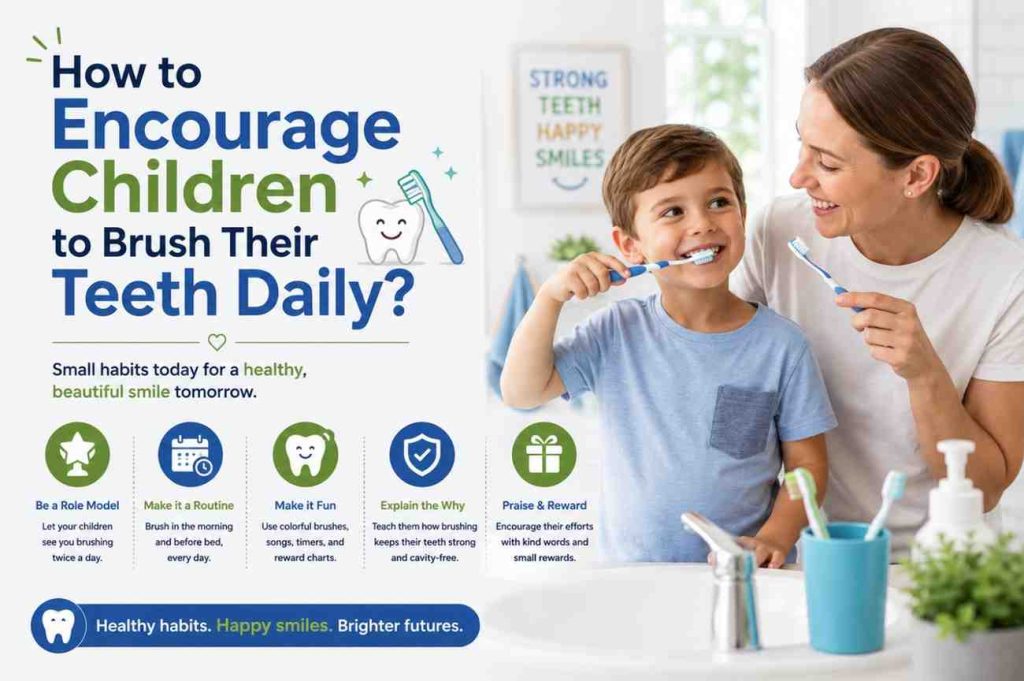
Helping children brush their teeth every day plays an important role in building lifelong oral health habits. While many children initially resist brushing, consistent routines and positive encouragement make the process easier over time. Parents and caregivers can create enjoyable experiences that transform brushing from a daily challenge into a familiar habit. Moreover, regular oral hygiene supports healthy teeth, protects gums, and encourages confidence as children grow. Small daily efforts often create lasting benefits that extend well beyond childhood.
Why Is Daily Tooth Brushing Important?
Healthy teeth support eating, speaking, smiling, and overall well-being. Brushing removes food particles and plaque that may contribute to tooth decay and gum problems when left untreated.
Children who develop healthy brushing habits early often continue those routines as they grow older. Consequently, establishing consistent oral hygiene during childhood supports long-term dental health.
Furthermore, daily brushing encourages children to take responsibility for their personal hygiene while building confidence through regular routines.
Benefits of Brushing Every Day
Consistent brushing provides several important advantages.
These include:
- Cleaner teeth
- Healthier gums
- Fresher breath
- Reduced plaque buildup
- Stronger oral hygiene habits
- Greater confidence when smiling
- Better long-term dental health
Daily brushing supports healthy development while preventing avoidable dental concerns.
When Children Should Begin Brushing
Oral care begins as soon as the first tooth appears.
Parents should:
- Clean your teeth gently
- Introduce a soft toothbrush
- Use an age-appropriate amount of toothpaste
- Supervise brushing
- Encourage twice-daily routines
Starting early makes brushing feel like a normal part of everyday life.
Creating Consistent Brushing Routines
Children respond well to predictable daily schedules. Therefore, brushing at the same time every morning and evening helps create familiar habits that become easier to follow.
Consistency reduces arguments because brushing becomes an expected part of daily routines rather than an occasional reminder.
Moreover, organized schedules encourage children to complete other healthy habits alongside brushing.
Building a Simple Routine
Healthy routines should remain easy to follow.
A basic schedule may include:
- Wake up
- Wash hands and face
- Brush teeth
- Eat breakfast
- Get dressed
Evening routines often include:
- Bath time
- Pajamas
- Brush teeth
- Read a story
- Go to bed
These predictable patterns help children know what comes next.
Why Repetition Works
Children often respond positively to repeated daily habits.
Regular repetition helps them:
- Remember each step
- Build independence
- Feel comfortable
- Develop responsibility
- Reduce resistance
Small daily routines gradually become automatic.
Making Brushing Enjoyable
Children participate more willingly when activities feel enjoyable rather than stressful. Turning brushing into a fun part of the day encourages greater cooperation.
Parents can create positive experiences without relying on pressure or punishment. Furthermore, enjoyable routines strengthen children’s willingness to continue brushing consistently.
Simple changes often make a significant difference.
Fun Ways to Encourage Brushing
Many creative ideas increase children’s interest.
Examples include:
- Playing a two-minute song
- Using colorful toothbrushes
- Choosing child-friendly toothpaste flavors
- Reading brushing stories
- Creating brushing charts
- Celebrating consistency
- Brushing together as a family
Positive experiences help children associate brushing with enjoyable moments.
Using Positive Encouragement
Praise motivates children more effectively than criticism.
Helpful encouragement includes:
- Recognizing daily effort
- Celebrating completed routines
- Offering verbal praise
- Acknowledging improvement
- Encouraging independence
Positive reinforcement builds confidence while strengthening healthy habits.
Leading by Example
Children frequently copy the behaviors they observe. Consequently, parents who brush their own teeth regularly provide powerful examples of healthy habits.
Family brushing time also creates opportunities to demonstrate proper techniques while making oral hygiene feel like a shared responsibility.
Moreover, children often enjoy participating when everyone brushes together.
Family Brushing Activities
Families can encourage healthy routines together.
Ideas include:
- Brushing side by side
- Using timers together
- Singing while brushing
- Checking brushing progress
- Creating family brushing challenges
Shared participation makes routines more enjoyable.
Teaching Proper Brushing Techniques
Children benefit from simple explanations that match their age and developmental stage. Clear demonstrations help them develop correct brushing habits while protecting their teeth and gums.
Parents should supervise brushing until children develop enough coordination to brush effectively on their own.
Moreover, gentle instruction builds confidence without creating unnecessary pressure.
Basic Brushing Steps
Children should practice several simple techniques.
Important steps include:
- Hold the toothbrush comfortably
- Brush gently using small circles
- Clean front and back teeth
- Brush chewing surfaces
- Brush the tongue gently
- Rinse when appropriate
- Store the toothbrush properly
Practicing these steps regularly encourages better oral hygiene.
Common Brushing Mistakes
Parents can help children avoid several common errors.
These include:
- Brushing too quickly
- Applying too much pressure
- Missing back teeth
- Forgetting the tongue
- Skipping nighttime brushing
- Using worn toothbrushes
Correcting these habits early supports healthier brushing routines.
Choosing the Right Toothbrush and Toothpaste
The right dental products help children brush comfortably while encouraging regular participation. Soft-bristled toothbrushes designed for children’s ages provide gentle cleaning while protecting sensitive gums.
Parents should also select toothpaste suitable for their child’s age according to professional recommendations.
Comfortable products make brushing feel easier and more enjoyable.
Features to Look For
Helpful toothbrush characteristics include:
- Soft bristles
- Comfortable handle
- Appropriate head size
- Easy grip
- Bright colors children enjoy
Choosing appealing products often increases enthusiasm for daily brushing.
Healthy Eating Supports Better Oral Health
Good nutrition works alongside daily brushing to keep children’s teeth healthy. While brushing removes plaque, balanced meals help strengthen teeth and gums from within. Consequently, combining healthy eating with regular oral hygiene creates a stronger foundation for lifelong dental wellness.
Moreover, limiting sugary snacks and drinks reduces the amount of sugar that remains on tooth surfaces between brushing sessions. Choosing nutritious foods also encourages healthy growth while supporting overall well-being.
Small dietary improvements make brushing efforts even more effective.
Foods That Support Healthy Teeth
Many everyday foods contribute to stronger teeth and healthier gums.
Helpful choices include:
- Fresh apples
- Carrots
- Cheese
- Plain yogurt
- Leafy green vegetables
- Eggs
- Whole grains
- Nuts when age-appropriate
- Fresh berries
- Water throughout the day
These foods provide valuable nutrients while supporting good oral health.
Handling Brushing Resistance Calmly
Many children resist brushing at different stages of development. However, calm responses often produce better results than arguments or punishment. Patience allows children to adjust gradually while building positive associations with oral care.
Furthermore, offering simple choices helps children feel involved without changing the importance of brushing. Allowing them to choose a toothbrush color or decide whether to brush upper or lower teeth first encourages cooperation.
Consistency remains more effective than occasional reminders.
Helpful Ways to Reduce Resistance
Simple strategies often improve cooperation.
Parents can:
- Stay calm during brushing time.
- Offer limited choices.
- Keep routines predictable.
- Avoid rushing.
- Praise cooperation immediately.
- Use encouraging language.
- Remain patient every day.
Positive interactions help children accept brushing more willingly.
Regular Dental Visits Reinforce Healthy Habits
Routine dental checkups complement daily brushing by helping monitor oral health and identify concerns early. Children also become more comfortable with dental care when visits occur regularly rather than only during emergencies.
Moreover, professional advice helps parents adjust brushing routines as children grow. Regular appointments reinforce the importance of consistent oral hygiene while encouraging healthy habits at home.
Preventive care supports long-term dental wellness.
Preparing Children for Dental Visits
Simple preparation helps children feel more relaxed.
Helpful ideas include:
- Talk positively about the visit.
- Explain each step simply.
- Read children’s books about dentists.
- Schedule appointments when children feel rested.
- Answer questions honestly.
- Stay calm and reassuring.
Comfortable experiences encourage confidence during future visits.
Using Rewards the Right Way
Encouragement motivates children effectively when rewards focus on healthy habits instead of sugary treats. Small celebrations recognize effort while reinforcing consistency.
Additionally, rewards should support long-term habit formation rather than becoming the only reason children brush their teeth. Verbal praise, stickers, or extra story time often provide meaningful motivation.
Healthy encouragement creates lasting routines.
Reward Ideas That Encourage Consistency
Simple incentives make progress exciting.
Consider:
- Sticker charts
- Colorful certificates
- Extra bedtime story
- Family game time
- Choosing the bedtime book
- Special activity with parents
- Weekly recognition for consistent brushing
These ideas celebrate commitment while supporting healthy habits.
School and Busy Schedules Should Not Interrupt Brushing
Busy mornings sometimes make brushing feel rushed. Nevertheless, maintaining the routine remains important regardless of changing schedules. Planning allows families to protect healthy habits even during demanding days.
Preparing school supplies the night before and waking up a few minutes earlier often creates enough time for proper brushing. Likewise, evening brushing should remain a non-negotiable part of bedtime.
Organized schedules support consistency throughout the year.
Simple Time-Saving Tips
Planning makes routines easier.
Helpful ideas include:
- Prepare clothes the night before.
- Keep toothbrushes easily accessible.
- Use a brushing timer.
- Create a visual morning checklist.
- Follow the same order every day.
- Avoid unnecessary distractions.
Small adjustments help families stay consistent.
Caregivers Play an Important Role
Parents, grandparents, childcare providers, and other caregivers all influence children’s oral hygiene habits. Consistent expectations across different environments make routines easier for children to follow.
Families discussing brushing routines with everyone involved in a child’s daily care helps reinforce healthy habits. For households coordinating childcare and personal care in Monroe Township, keeping brushing expectations consistent between home and caregiving settings encourages children to view oral hygiene as a normal part of every day rather than an occasional task.
Working together strengthens routine and reduces confusion.
Ways Caregivers Can Stay Consistent
Consistency creates better long-term results.
Caregivers should:
- Follow the same brushing schedule.
- Use encouraging language.
- Supervise brushing when needed.
- Reinforce proper techniques.
- Praise effort consistently.
- Communicate about progress.
- Keep supplies readily available.
Shared expectations support stronger oral hygiene habits.
Helping Children Become Independent Brushers
Independence develops gradually as children improve their coordination and confidence. Parents should continue supervising while allowing children to complete more of the brushing process themselves.
Moreover, encouraging responsibility without expecting perfection creates positive learning opportunities. Small improvements deserve recognition because confidence grows through repeated success.
Developing independence prepares children to maintain healthy habits throughout childhood.
Signs Children Are Ready for More Responsibility
Parents may gradually increase independence when children can:
- Hold the toothbrush correctly.
- Follow simple instructions.
- Brush for two minutes.
- Reach every area of the mouth.
- Rinse appropriately.
- Remember brushing times with reminders.
Support and supervision remain important while these skills continue developing.
Building Lifelong Oral Hygiene Habits
Daily brushing during childhood creates routines that often continue into adulthood. Consistency, encouragement, and patience help children view oral hygiene as a normal part of everyday life rather than an unwanted task. Consequently, small daily actions contribute to healthier smiles for many years.
Parents and caregivers should continue reinforcing positive habits as children grow. Moreover, adapting routines to match changing ages and abilities keeps brushing both effective and enjoyable.
Healthy habits develop gradually through repetition rather than perfection. Every successful brushing session strengthens confidence while encouraging greater independence.
Habits That Support Long-Term Success
Simple daily routines help children maintain healthy oral care.
Helpful habits include:
- Brushing every morning
- Brushing before bedtime
- Replacing toothbrushes regularly
- Drinking water after meals
- Eating balanced foods
- Visiting the dentist regularly
- Keeping brushing supplies clean
- Following consistent routines
These habits support healthy teeth while encouraging lifelong responsibility.
Adapting Brushing Routines as Children Grow
Children’s oral care needs change as they develop new skills and gain independence. Therefore, parents should adjust supervision and instruction according to each child’s age while continuing to reinforce proper techniques.
Older children often appreciate additional responsibility, whereas younger children benefit from hands-on guidance. Furthermore, encouraging independence while providing gentle supervision helps prevent incorrect brushing habits from developing.
Flexible routines allow children to build confidence without losing consistency.
Ways to Encourage Continued Progress
Parents can keep children motivated through simple adjustments.
Helpful approaches include:
- Introduce age-appropriate toothbrushes.
- Refresh brushing charts occasionally.
- Continue brushing together sometimes.
- Praise consistent effort.
- Encourage responsibility gradually.
- Review brushing techniques regularly.
- Keep routines positive.
These ideas help children remain interested while strengthening healthy habits.
Creating a Positive Home Environment for Oral Care
A supportive home makes healthy habits easier to maintain. Calm encouragement, predictable routines, and positive communication reduce resistance while helping children feel successful during brushing.
Moreover, families who treat brushing as a normal daily activity rather than a punishment often experience better cooperation. Consistency, patience, and teamwork encourage children to view oral hygiene as a valuable part of self-care.
Healthy routines become easier when everyone participates together.
Characteristics of a Supportive Brushing Routine
Successful family routines often include:
- Regular brushing times
- Positive encouragement
- Calm communication
- Easy access to dental supplies
- Shared family participation
- Consistent supervision
- Healthy daily habits
These qualities create an environment where children feel motivated to care for their teeth.
Conclusion
Helping children brush their teeth every day requires consistency, patience, and positive encouragement rather than pressure. Predictable routines, enjoyable activities, healthy nutrition, proper brushing techniques, and supportive caregivers all contribute to lasting oral hygiene habits. As children gain confidence and independence, daily brushing becomes a natural part of their routine. Building these healthy habits early supports stronger teeth, healthier gums, and greater confidence throughout childhood and beyond.
FAQs
1. At what age should children start brushing their teeth?
Parents should begin cleaning a baby’s mouth when the first tooth appears. A soft toothbrush and an age-appropriate amount of toothpaste help establish healthy oral hygiene habits early while making brushing a familiar part of everyday care.
2. How often should children brush their teeth?
Children should brush their teeth twice each day, once in the morning and once before bedtime. Consistent brushing removes plaque, supports healthy gums, and helps reduce the risk of tooth decay while encouraging lifelong oral hygiene habits.
3. How long should children brush their teeth?
Most dental professionals recommend brushing for about two minutes. Using a timer, favorite song, or brushing app can help children brush long enough while making the routine more enjoyable and easier to follow consistently.
4. What type of toothbrush is best for children?
Children benefit from soft-bristled toothbrushes with small heads and comfortable handles designed for their age group. Bright colors or favorite characters may also encourage enthusiasm while keeping brushing gentle and effective.
5. How can parents motivate children who dislike brushing?
Positive encouragement, consistent routines, colorful toothbrushes, music, sticker charts, and family brushing sessions often improve cooperation. Remaining patient and avoiding punishment helps children build healthier attitudes toward daily oral hygiene.
6. Does nutrition affect children’s dental health?
Yes. Balanced meals rich in calcium, vitamins, and minerals support strong teeth and healthy gums. Limiting sugary snacks and drinks also reduces plaque buildup while complementing regular brushing and routine dental care.
7. When can children brush their teeth independently?
Children develop brushing independence gradually. Parents should continue supervising until children demonstrate good coordination, brush thoroughly for two minutes, and consistently clean every area of the mouth using proper techniques.
8. Why is nighttime brushing especially important?
Brushing before bedtime removes food particles and plaque that remain on teeth overnight. Since saliva production decreases during sleep, nighttime brushing helps protect teeth from bacteria and supports healthier oral hygiene.
9. How often should children’s toothbrushes be replaced?
Replace toothbrushes approximately every three months or sooner if bristles become worn. Fresh toothbrushes clean more effectively while protecting sensitive gums and encouraging comfortable daily brushing.
10. What is the greatest benefit of building brushing habits early?
Establishing daily brushing routines during childhood encourages lifelong oral hygiene, healthier teeth, stronger gums, greater independence, and increased confidence. Consistent habits developed early often continue into adulthood, supporting better overall dental health.