
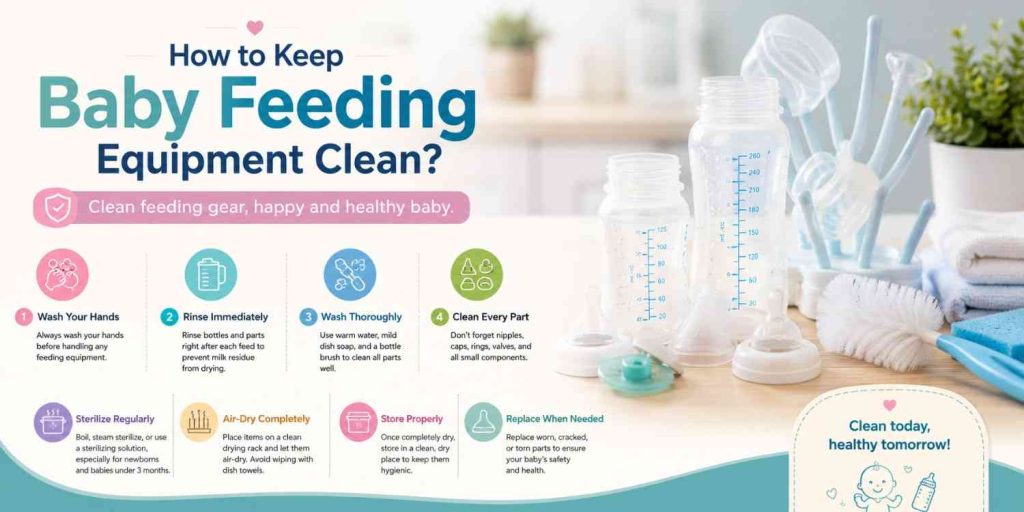
Keeping baby feeding equipment clean plays an essential role in protecting infants from harmful germs and supporting healthy growth. Bottles, nipples, breast pump parts, spoons, bowls, and other feeding accessories come into frequent contact with milk and food, making proper cleaning especially important. Consistent hygiene practices help reduce contamination while creating safer feeding routines. Moreover, simple daily habits make cleaning easier and more effective. By following organized cleaning methods, parents and caregivers can help maintain a healthier feeding environment for every baby.
Why does clean feeding equipment matter?
Babies have developing immune systems that require extra protection from bacteria and other contaminants. Feeding equipment that is not cleaned properly may allow milk residue and food particles to remain on surfaces, creating conditions where germs can multiply.
Consequently, regular cleaning supports healthier feeding practices while reducing unnecessary health risks. Furthermore, clean equipment helps preserve the quality of bottles, cups, and feeding accessories by preventing stubborn residue buildup.
Good hygiene benefits both babies and caregivers.
Benefits of Proper Cleaning
Consistent cleaning provides several important advantages.
These include:
- Cleaner feeding equipment
- Reduced germ buildup
- Safer feeding routines
- Fresher bottles and accessories
- Longer equipment lifespan
- Better overall hygiene
- Greater caregiver confidence
Healthy cleaning habits contribute to safer infant care.
Equipment That Requires Regular Cleaning
Many feeding items require attention after every use.
Common examples include:
- Baby bottles
- Bottle nipples
- Bottle caps
- Breast pump parts
- Baby spoons
- Feeding bowls
- Training cups
- Pacifiers used during feeding
Cleaning every item thoroughly supports safer feeding.
Wash Hands Before Handling Feeding Equipment
Clean hands remain the first step in maintaining proper feeding hygiene. Even perfectly cleaned bottles may become contaminated if handled with unwashed hands.
Parents and caregivers should wash their hands thoroughly before preparing bottles, assembling feeding equipment, or feeding a baby. Moreover, proper handwashing reduces the transfer of germs during every stage of feeding preparation.
Simple hygiene practices create stronger protection for infants.
Proper Handwashing Steps
Effective handwashing requires only a few simple steps.
Remember to:
- Wet hands with clean water
- Apply soap
- Rub hands thoroughly
- Clean between fingers
- Wash under fingernails
- Rinse completely
- Dry using a clean towel
Consistent handwashing supports healthier feeding routines.
Clean Equipment Immediately After Feeding
Allowing milk or food residue to remain inside bottles makes cleaning more difficult later. Therefore, rinsing equipment immediately after each feeding prevents dried residue from sticking to surfaces.
Prompt cleaning also reduces unpleasant odors while helping maintain bottle quality over time. Furthermore, immediate rinsing shortens the time required for complete washing.
Small daily habits improve overall hygiene.
Steps to Follow After Each Feeding
Parents can simplify cleaning by following a routine.
Recommended steps include:
- Empty the remaining milk
- Rinse with clean water
- Separate bottle parts
- Wash each component individually
- Inspect for leftover residue
- Allow proper drying
These habits reduce buildup while supporting better cleanliness.
Wash Every Part Thoroughly
Feeding equipment often contains small areas where milk residue collects easily. Bottle threads, nipples, valves, and breast pump components require careful attention during washing.
Consequently, cleaning every piece separately helps remove hidden residue that could otherwise remain unnoticed.
Taking extra time during washing improves overall hygiene while protecting feeding equipment.
Items That Should Be Separated Before Washing
Proper cleaning begins by taking equipment apart.
Separate:
- Bottle body
- Bottle nipple
- Bottle ring
- Bottle cap
- Valve components
- Pump connectors
- Collection containers
Cleaning each part individually provides better results.
Cleaning Tools That Help
Certain cleaning tools improve effectiveness.
Helpful items include:
- Bottle brushes
- Small nipple brushes
- Soft cleaning cloths
- Mild dish soap
- Clean drying rack
Using dedicated cleaning supplies supports safer bottle care.
Choose Safe Cleaning Products
Cleaning products should remove residue without leaving harmful substances behind. Mild dish soap designed for everyday household use often provides effective cleaning when rinsed thoroughly.
Strong chemicals, abrasive cleaners, or heavily scented products may not be suitable for feeding equipment. Therefore, choosing gentle cleaning products helps protect both babies and feeding accessories.
Simple products often work best.
What to Avoid During Cleaning
Certain products may damage feeding equipment.
Avoid using:
- Harsh chemical cleaners
- Abrasive scrubbing pads
- Strong bleach solutions unless specifically recommended
- Highly scented soaps
- Damaged cleaning brushes
Gentle cleaning protects feeding equipment while maintaining hygiene.
Sterilizing Feeding Equipment
Regular sterilization provides additional protection, especially for newborns and younger infants. Sterilizing removes many germs that ordinary washing alone may not eliminate.
Parents should follow manufacturer instructions because different feeding products may require different sterilization methods. Moreover, proper sterilization supports safer bottle preparation during early infancy.
Combining washing with sterilization strengthens feeding hygiene.
Common Sterilization Methods
Several effective options are available.
Common methods include:
- Boiling water
- Steam sterilizers
- Microwave sterilization systems designed for baby products
- Electric sterilizers
Following product instructions helps ensure safe and effective sterilization.
Dry Feeding Equipment Properly
Drying plays an important role in maintaining clean feeding equipment. Even after careful washing and sterilization, improper drying may allow moisture to remain on surfaces where germs can multiply. Therefore, allowing equipment to air dry completely helps maintain better hygiene.
Moreover, placing bottles and accessories on a clean drying rack prevents unnecessary contact with kitchen surfaces. Avoid stacking damp items because trapped moisture slows the drying process.
Complete drying supports safer feeding preparation.
Best Practices for Drying Equipment
Simple habits improve drying effectiveness.
Helpful steps include:
- Place items upside down on a drying rack.
- Allow air circulation around every piece.
- Separate bottle parts while drying.
- Keep the drying area clean.
- Store equipment only after it dries completely.
- Replace wet towels regularly.
These practices reduce moisture while supporting cleaner feeding equipment.
Store Feeding Equipment Safely
Proper storage protects clean equipment from dust, dirt, and household contaminants. Once bottles and accessories have dried completely, they should remain in a clean, dry location until the next feeding.
Furthermore, organizing feeding supplies makes daily preparation easier while helping caregivers identify missing or damaged items quickly.
Safe storage preserves the effort invested in careful cleaning.
Storage Tips for Better Hygiene
Organized storage supports healthy feeding routines.
Consider these simple ideas:
- Store bottles with clean lids.
- Keep equipment in closed cabinets.
- Separate clean and used items.
- Organize accessories together.
- Avoid overcrowded storage spaces.
- Keep storage areas dry.
Good organization promotes consistent cleanliness.
Inspect Feeding Equipment Regularly
Cleaning alone cannot maintain safety if feeding equipment becomes damaged. Cracks, scratches, worn nipples, or broken components may trap milk residue and become difficult to clean completely.
Consequently, regular inspection helps parents replace damaged items before hygiene becomes compromised. Well-maintained feeding equipment also functions more effectively during daily use.
Routine inspections require only a few minutes but provide valuable reassurance.
Signs Equipment Should Be Replaced
Watch for visible signs of wear.
Common examples include:
- Cracked bottles
- Torn bottle nipples
- Loose bottle rings
- Cloudy plastic
- Deep scratches
- Damaged valves
- Broken breast pump parts
Replacing worn equipment supports safer feeding.
Keeping Feeding Equipment Clean While Traveling
Travel often changes normal routines, making feeding hygiene more challenging. Nevertheless, careful planning allows parents to maintain clean equipment even when away from home.
Packing enough bottles, clean storage containers, bottle brushes, and safe cleaning supplies reduces unnecessary stress during travel. Moreover, organizing supplies before leaving home simplifies feeding throughout the trip.
Preparation helps maintain healthy routines wherever families go.
Travel Hygiene Essentials
A well-prepared feeding bag supports cleaner feeding.
Helpful items include:
- Extra bottles
- Clean bottle nipples
- Mild dish soap
- Bottle brush
- Clean storage bags
- Hand sanitizer when handwashing is unavailable
- Disposable cleaning cloths
These essentials make travel feeding more convenient.
Maintaining Hygiene During Childcare
Babies often receive feedings from different caregivers throughout the day. Consequently, everyone involved should follow consistent cleaning procedures to maintain proper hygiene.
Families coordinating childcare and personal care in Monroe Township benefit from sharing clear instructions for cleaning, sterilizing, drying, and storing feeding equipment. Consistent practices between home and childcare settings reduce confusion while helping protect infant health.
Shared communication supports safer feeding routines.
Ways Caregivers Can Stay Consistent
Simple communication improves daily hygiene.
Caregivers should:
- Follow the same cleaning routine.
- Wash hands before preparing bottles.
- Label feeding equipment clearly.
- Store clean bottles separately.
- Report damaged equipment promptly.
- Keep cleaning supplies available.
- Follow feeding instructions carefully.
Consistency creates safer feeding environments.
Create a Daily Cleaning Routine
Organized routines reduce the chance of missing important cleaning steps. Following the same process after every feeding makes hygiene easier to maintain while saving time throughout the day.
Furthermore, consistent routines help every caregiver follow identical procedures regardless of who prepares the baby’s bottle. Predictable habits support long-term cleanliness.
Simple routines encourage better organization.
Sample Daily Cleaning Checklist
A basic checklist keeps cleaning organized.
Daily reminders include:
- Wash hands first.
- Rinse bottles immediately.
- Wash every component thoroughly.
- Sterilize when appropriate.
- Air dry completely.
- Store equipment safely.
- Inspect for damage regularly.
Following this routine supports dependable feeding hygiene every day.
Maintaining Feeding Equipment for Long-Term Use
Proper care extends the life of baby feeding equipment while supporting consistent hygiene. Regular cleaning, careful handling, and timely replacement help bottles, nipples, and accessories remain safe for everyday use. Consequently, families spend less time dealing with damaged products and more time focusing on healthy feeding routines.
Moreover, following manufacturer instructions for cleaning and storage helps protect feeding equipment from unnecessary wear. Avoid exposing bottles to excessive heat when not recommended, and inspect every item before each use. Preventive care reduces the likelihood of unexpected problems during feeding.
Keeping feeding equipment in good condition also supports smoother daily routines. Organized storage, routine inspections, and careful handling create a dependable system that benefits both caregivers and babies.
Simple Habits That Protect Feeding Equipment
Small daily actions make a meaningful difference.
Helpful habits include:
- Clean equipment after every feeding.
- Replace worn bottle nipples promptly.
- Store bottles in dry locations.
- Use dedicated cleaning brushes.
- Follow sterilization instructions carefully.
- Check equipment before every use.
- Replace damaged accessories immediately.
- Keep feeding supplies organized.
These habits support cleanliness while extending the usefulness of feeding equipment.
Adapting Cleaning Routines as Babies Grow
Feeding routines naturally change as babies develop. Bottles may gradually give way to training cups, spoons, bowls, and self-feeding accessories. Therefore, cleaning practices should adapt while maintaining the same high standards of hygiene.
Moreover, introducing solid foods often creates additional cleaning needs because thicker foods leave different types of residue. Washing utensils, bowls, bibs, and cups immediately after meals helps prevent dried food from becoming difficult to remove.
Parents should continue emphasizing cleanliness regardless of the feeding method. Consistent hygiene remains important throughout every stage of early childhood.
Equipment That Needs Ongoing Attention
As feeding changes, additional items require regular cleaning.
These often include:
- Training cups
- Silicone spoons
- Baby bowls
- Divided plates
- Snack containers
- Bibs with food pockets
- Reusable food pouches
Maintaining every feeding accessory helps create a cleaner eating environment.
Creating Safe Feeding Habits for the Whole Family
Healthy feeding routines depend on more than clean bottles alone. Good hygiene includes clean preparation areas, washed hands, safe food storage, and organized feeding supplies. Consequently, every family member involved in feeding should follow the same procedures.
Furthermore, consistency prevents confusion while making everyday routines easier to manage. Children also benefit from observing positive hygiene habits as they grow older and begin eating independently.
Working together creates a cleaner environment where safe feeding practices become part of normal family life.
Characteristics of a Healthy Feeding Routine
Well-organized routines often include:
- Washing hands before feeding
- Cleaning equipment immediately after use
- Sterilizing when appropriate
- Air drying completely
- Safe storage practices
- Regular equipment inspection
- Organized preparation areas
These habits support healthier feeding experiences while encouraging long-term cleanliness.
Conclusion
Keeping baby feeding equipment clean protects infant health while creating safe and dependable feeding routines. Thorough washing, appropriate sterilization, careful drying, proper storage, and regular equipment inspection all contribute to better hygiene. Consistent daily habits reduce contamination, simplify caregiving, and support healthy growth. As families follow organized cleaning routines, feeding becomes safer, more efficient, and easier to manage throughout every stage of early childhood.
FAQs
1. How often should baby feeding equipment be cleaned?
Every bottle, nipple, spoon, bowl, breast pump part, and feeding accessory should be cleaned immediately after each use. Prompt washing removes milk or food residue before it dries, helping maintain better hygiene and reducing the risk of bacterial growth.
2. Is rinsing baby bottles enough after feeding?
No. Rinsing removes some leftover milk, but it does not clean feeding equipment completely. Bottles should be washed thoroughly with warm water, mild soap, and appropriate cleaning brushes before drying or sterilizing according to recommended instructions.
3. Why is sterilizing feeding equipment important?
Sterilization provides additional protection by reducing germs that ordinary washing may not remove completely. It is especially valuable for newborns and younger infants because their immune systems continue developing during the early months of life.
4. How should feeding equipment be dried after washing?
Allow bottles and accessories to air dry completely on a clean drying rack. Separate every component to improve air circulation, and avoid drying with used kitchen towels because they may transfer unwanted germs onto clean equipment.
5. When should bottle nipples be replaced?
Replace bottle nipples whenever they become torn, cracked, sticky, discolored, or worn. Damaged nipples may collect residue, become difficult to clean properly, and affect safe feeding. Regular inspection helps identify replacement needs early.
6. Can feeding equipment be cleaned in a dishwasher?
Some bottles and accessories are dishwasher-safe, while others require handwashing. Always follow the manufacturer’s cleaning instructions to avoid damaging feeding equipment. Proper placement inside the dishwasher also helps improve cleaning effectiveness when permitted.
7. What should parents pack to keep bottles clean during travel?
Pack extra bottles, clean nipples, bottle brushes, mild dish soap, clean storage bags, and other feeding essentials. Planning allows families to maintain good hygiene even when feeding takes place away from home.
8. Why is handwashing important before preparing bottles?
Clean hands reduce the transfer of germs onto bottles, nipples, breast pump parts, and feeding utensils. Washing hands thoroughly before handling feeding equipment provides an important layer of protection for babies during every feeding.
9. How should clean feeding equipment be stored?
Store completely dry feeding equipment in a clean, dry cabinet or covered storage container. Keeping bottles and accessories protected from dust, moisture, and household contaminants helps preserve cleanliness until the next feeding.
10. What is the greatest benefit of maintaining clean feeding equipment?
The greatest benefit is supporting safer feeding by reducing contamination risks while protecting infant health. Consistent cleaning, sterilization, drying, and storage create dependable routines that promote hygiene, simplify caregiving, and encourage healthy growth.